Tips for Creating a Relaxing Home Office Environment to Boost Productivity
Creating a relaxing home office environment is an essential step for anyone working from home. A calm and comfortable workspace not only reduces stress but also helps increase focus and efficiency. In this post, we’ll share practical tips to help you design a home office that boosts productivity while promoting relaxation.
Why a Relaxing Home Office Matters
When your workspace feels cluttered or chaotic, it can be hard to concentrate. On the other hand, a soothing environment encourages creativity, motivation, and endurance. By tailoring your home office to your needs, you set yourself up for success and a better work-life balance.
Choosing the Right Location
Find a Quiet Spot
Start by selecting a part of your home that is quiet and away from daily distractions like the TV or high-traffic areas. This helps you focus and reduces interruptions.
Consider Natural Light
Whenever possible, place your desk near a window. Natural light improves mood and alertness, which supports productivity. If natural light is limited, invest in a good quality desk lamp with adjustable brightness.
Organize Your Workspace
Declutter Regularly
A tidy desk clears your mind. Keep only essential items on your desk and store the rest in drawers or shelves. Regularly declutter to maintain a clean environment.
Use Storage Solutions
Bins, baskets, and drawer organizers keep paperwork, supplies, and electronics neatly arranged. Labeling storage can save time when you need something quickly.
Invest in Comfortable and Functional Furniture
Ergonomic Desk and Chair
Choosing the right desk and chair is crucial. A comfortable chair with good lumbar support and an adjustable height helps maintain proper posture and prevent fatigue.
Desk Layout
Arrange your computer, keyboard, and other tools within easy reach to avoid stretching or strain. Leave enough space for writing or other tasks.
Incorporate Calming Colors and Décor
Choose Soothing Colors
Colors like soft blues, greens, and neutrals promote calmness. Paint your walls or decorate with items in these shades to create a peaceful atmosphere.
Add Personal Touches
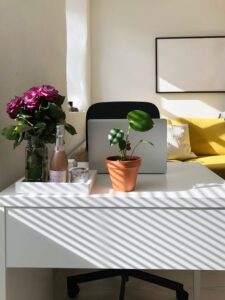
Framed photos, plants, or artwork can make your workspace feel inviting without distracting you. Choose items that make you feel relaxed and inspired.
Manage Noise and Distractions
Use Noise-Canceling Tools
If external sounds are a problem, consider noise-canceling headphones or white noise machines to create a quieter environment.
Set Boundaries
Let family members or roommates know your work hours and ask for their support in minimizing interruptions during those times.
Improve Air Quality and Comfort
Add Plants
Indoor plants improve air quality and add a touch of nature. Easy-care plants like succulents or snake plants are great choices.
Maintain Comfortable Temperature
Ensure your workspace is neither too hot nor too cold. Use fans, heaters, or open windows as needed to stay comfortable.
Optimize Lighting for Productivity
Avoid Glare
Position your computer screen to avoid glare from windows or lights. Use adjustable blinds or curtains to control sunlight.
Layer Your Lighting
Combine ambient light with task lighting to reduce eye strain. A desk lamp with adjustable color temperature can be helpful, especially during evening hours.
Take Breaks and Move Often
Follow the 20-20-20 Rule
Every 20 minutes, look at something 20 feet away for 20 seconds to reduce eye strain.
Stand and Stretch
Incorporate short breaks to stand, stretch, or walk around. Movement keeps energy levels up and prevents stiffness.
Use Technology Wisely
Minimize Digital Clutter
Keep your desktop and browser tabs organized. Close unused applications to reduce visual noise and improve computer speed.
Use Focus Tools
Apps that block distracting websites or track productivity can help maintain concentration throughout the workday.
Personalize Your Routine
Set Goals and Priorities
Start each day by listing your key tasks. A clear plan helps you stay on track and reduces stress.
Create a Ritual
Whether it’s brewing your favorite tea before starting or listening to calming music, small routines signal your brain that it’s time to work.
Conclusion
Designing a relaxing home office environment is about creating a space where you feel comfortable, focused, and motivated. By choosing the right location, organizing your space, and paying attention to comfort and lighting, you can build a productive workspace that supports both your work and well-being. Making small adjustments tailored to your preferences will lead to better focus, less stress, and a more enjoyable workday at home.